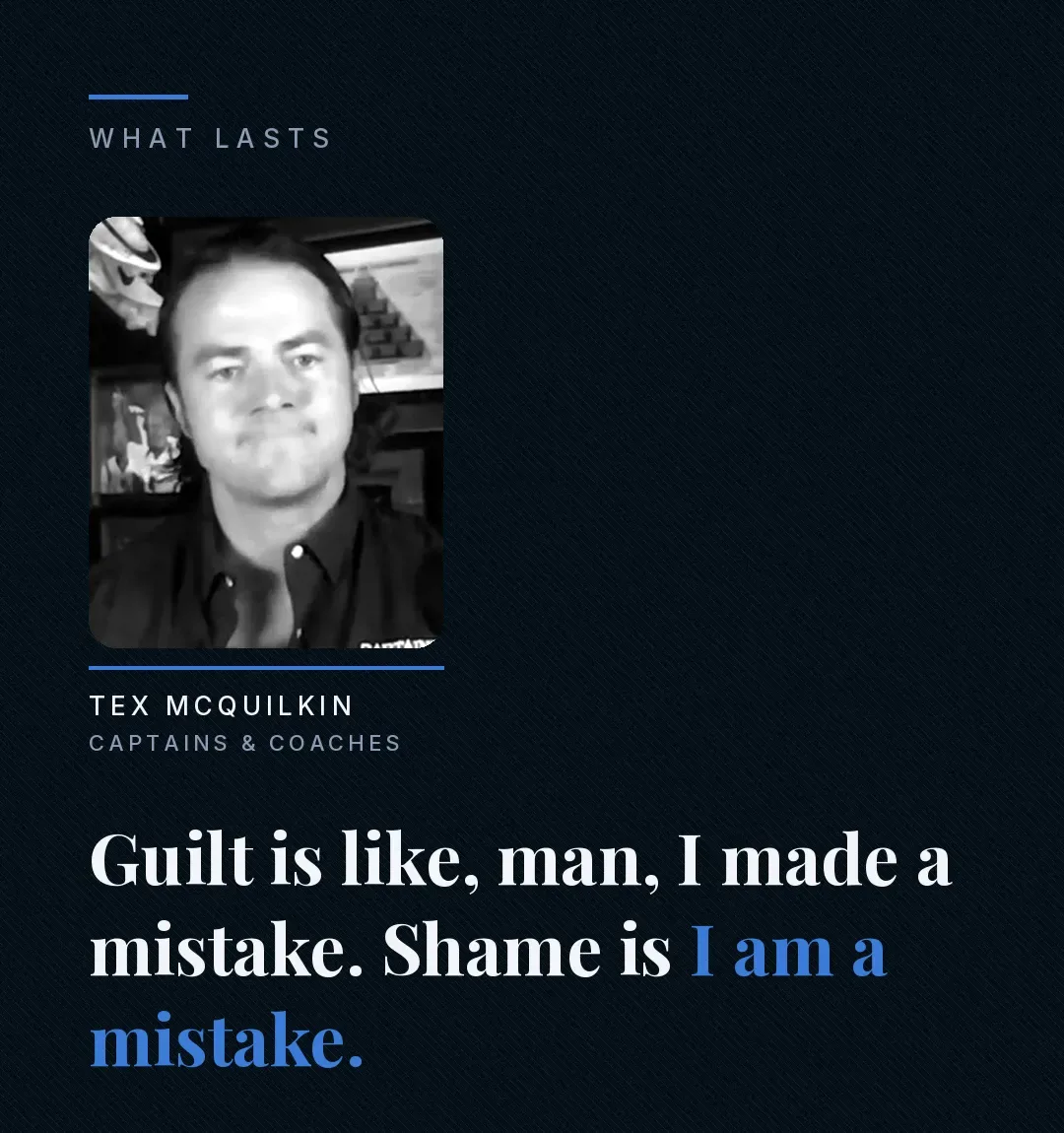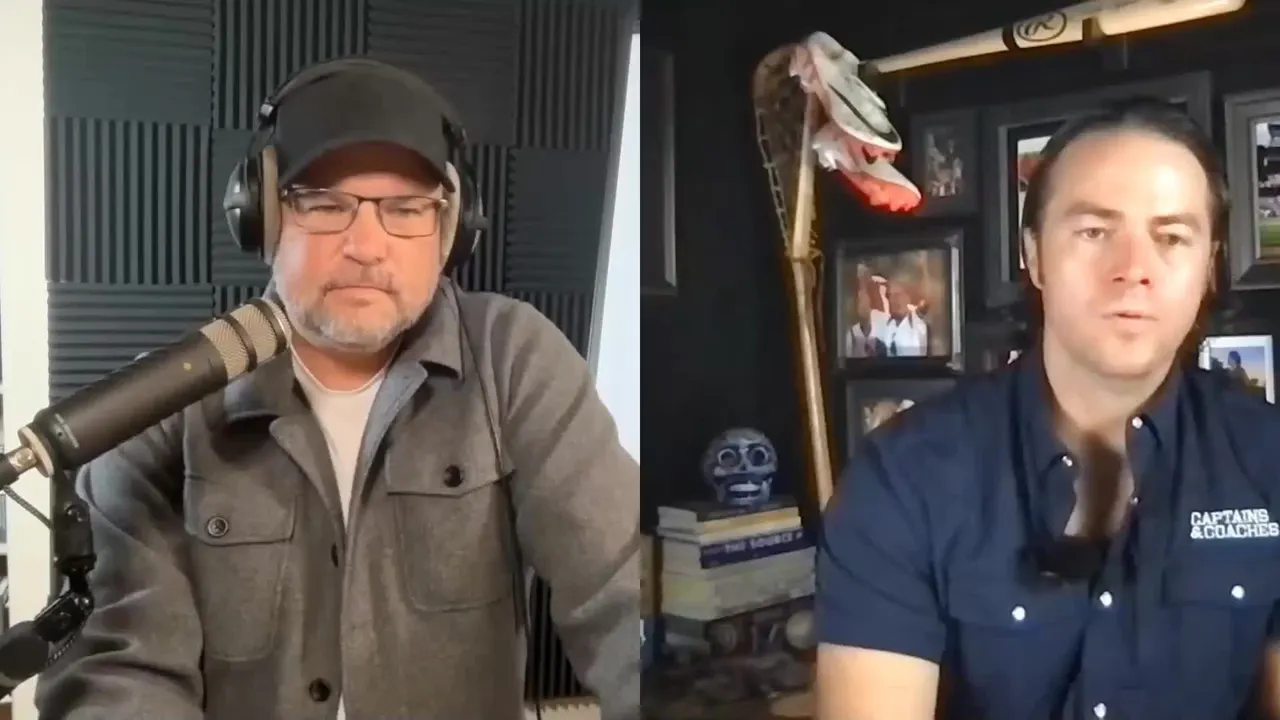
On What Lasts, Tex McQuilkin put the difference between guilt and shame in two sentences.
Guilt is like, man, I made a mistake. Shame is I am a mistake.
Tex McQuilkin, What Lasts, Episode 3
He was talking about teenage athletes. A player’s buddies invite him to a party the Friday before a Saturday game. He goes. He shows up the next day at sixty percent. If his coach shames him for it, the kid hears that the bad decision is who he is. And he believes it… so he keeps doing it, because that’s who he is now.
Tex goes the other way. He walks the kid back to the fork in the road, the moment the decision actually got made, so the next time somebody pressures him he knows exactly how it felt and how it affected everybody else on the team. The sentence Tex wants that kid to hear is simple.
You’re a good kid, that was a bad decision.
Tex McQuilkin
Now take the lacrosse field out of it.
Every family already has a way of handling mistakes
Almost nobody chose theirs. It got caught, taught or thought along the way. Some of us grew up where a mistake got a lecture. Some where it got silence. Some where it got brought up at every holiday for twenty years. That’s a belief system, and it doesn’t stay in childhood. It walks into the marriage the first time money gets tight. It walks into the business the first time a son or a son-in-law makes a bad call. It shows up in the conversation nobody wants to have about who steps in if something happens.
And here’s the thing. Shame takes hold in a family because there’s usually nothing else to measure the mistake against. If a family has never defined who it is, the only thing left to judge is the person.
Something to walk back to
A few years back I had the opportunity to hang out with Jerry Jones during a draft. He said there’s a difference between a bad guy and a guy who sometimes does bad things, and he was looking for upside potential. Tex is doing the same thing with teenagers, and it’s the same thing a family has to do with each other.
When a family has defined its values, the mission behind what it’s building and how it handles the hard conversations, a bad decision gets measured against who the family said it is. The person gets to stay part of the family while the decision gets dealt with. “That’s not who we are” lands very differently than “that’s who you are.” One keeps the door open. The other closes it, and families that close enough doors stop being families long before anybody reads a will.
Tex coaches kids to make the right call at the next fork in the road. A family needs the same thing… a defined core it can walk back to. That’s the work HeyFi does with families, and it starts long before the next generation takes anything over. It starts with how you talk to each other today.
Because a family that can tell the difference between a bad decision and a bad person stays a family long enough to build something that lasts.
Tex’s work is with athletes and the coaches who lead them, and you can find it at captainsandcoaches.com. The full conversation is in the episode post.